


This guide answers what crochet is from a wearer's point of view, because crochet is having a real moment right now. Charlie B notices that most online explanations are written for people who want to make it stitch by stitch. This one is different. It is for the woman who keeps seeing crochet on the rack and simply wants to understand the technique she is choosing to wear.
What Is Crochet? The Basic Technique Explained
So what is crochet, exactly? It is fabric formed by pulling interlocking loops of yarn through one another using a single hook. Unlike woven cloth or knit fabric made on needles, crochet builds one stitch at a time, loop by loop. That stitch-by-stitch method is what gives the finished piece its open, textured, slightly sculptural look. Once you recognize that hook-and-loop structure, the whole trend starts to make a lot more sense on the hanger, and it becomes easier to appreciate why crochet feels so distinct from anything machine-made.
A Brief History of Crochet
Crochet has a real heritage behind it. The technique traces its roots to the early 1800s, when it began as a practical, handmade craft passed down through generations. Over time, it moved well beyond the parlour, stepping onto fashion runways and into ready-to-wear collections. Part of why a centuries-old technique keeps resurfacing is its handmade character. Machines never fully replaced that made-by-hand quality, so crochet reads as personal and textured in a way few modern fabrics manage to match. That sense of history and craftsmanship is exactly what draws so many people back to it season after season.
Crochet vs Knit, What's the Difference
The crochet vs knit question is the one shoppers ask most. Knitting uses two knitting needles and works in continuous rows, with live loops held on the needles as you go. Crochet uses a single crochet hook and completes each stitch before moving to the next. That difference in stitch structure matters. Because crochet finishes loop by loop rather than holding a whole row, the resulting fabric tends to be more open and textured than smooth, close-knit knitwear. It is also why crochet drapes and moves differently on the body than a solid knit does.
Common Types of Crochet Stitches and Patterns

Knowing a few crochet stitches helps you read a garment at a glance. Tighter stitches worked close together create a denser, more solid fabric with less see-through. Open weave stitches produce the lacy, airy look most associated with the trend. Filet and granny square style patterns fall on the more decorative, openwork end. Pattern density affects both the look and the amount of layering a piece needs, so a very open design usually calls for something underneath. Once you can spot these patterns, choosing the right piece becomes far more intuitive. S
What Yarn Is Crochet Made From
Crochet can be worked from cotton, linen, wool, or blended yarn, and the fibre shapes how a garment feels far more than the stitch does. Among crochet yarn types, natural fibres like cotton and linen breathe well, which makes them a natural fit for summer pieces. Wool and blended fibres add warmth and structure for cooler weather. If comfort is your priority, look at the fibre content first, then consider the stitch pattern second. That single habit will steer you toward pieces that actually feel good all day.
Crochet vs Macrame: How They Compare
The crochet vs macrame mix-up is easy to make. Macrame is built by knotting cord together by hand, with no hook involved. Crochet loops yarn with a single crochet hook, one stitch at a time. The two get confused because both knotting and looping can create an open, textured result. The practical distinction for shoppers is simple. Macrame tends to show up in wall hangings and bags, while crochet is the one you will find in wearable tops and dresses. If you are shopping for something to wear rather than display, crochet is what you are after.
Why Crochet Creates an Open, Textured Fabric
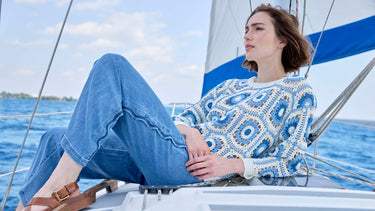
The look shoppers notice first comes straight from the construction. The loop-and-hook method naturally leaves small gaps between stitches rather than a solid surface. Those gaps are what give crochet its signature texture, its soft drape, and its gentle movement as you wear it. It is also why layering underneath is part of the plan. An open weave is designed to sit over a cami or slip, letting the texture read while keeping the piece comfortable and easy to wear. Understanding this makes styling crochet feel simple rather than intimidating.
Styling Crochet for Women Over 40
Crochet is often seen on very young shoppers, which can lead women over 40 to assume the trend is not for them. It absolutely is, and the key is proportion and layering rather than skipping the trend altogether. A crochet top over a smooth cami reads as intentional and polished, not fussy. Pair an open-weave piece with tailored wide-leg pants or straight-leg jeans to balance the texture with a clean line. Choose slightly denser stitches for a more refined finish, and let a single crochet piece be the focal point rather than layering texture on texture. Done this way, crochet becomes a versatile, grown-up staple that flatters and feels effortless.
Crochet Through a Canadian Summer
Crochet is practically made for the Canadian summer, when you want something breathable for warm afternoons but versatile enough for cooler evenings. Its open weave keeps air moving on hot days from coast to coast in Canada, while the same texture layers beautifully over a cami for a breezy patio dinner or a lakeside weekend. Because Canadian summers can swing from humid heat to a sudden cool breeze, a crochet piece worn over a slip gives you an easy way to adjust. Reach for natural cotton and linen crochet through July and August, then layer it under a light jacket as the season turns toward fall. This adaptability is exactly why so many Canadian wardrobes lean on crochet from spring right through the warmer months. Build a warm-weather rotation with the dresses and linen collections.
How to Tell if a Crocheted Garment Will Last
Judging quality is where understanding what crochet is at the construction level pays off. Start with stitch density and tension. Tighter, denser stitching holds its shape far better over time than a loose, very open weave that can sag or stretch. Then check the seam construction. Finished, secured seams and neat edges signal care, while raw or fraying edges are a warning sign. A little attention to these details tells you a lot about how a piece will wear before you buy it, and it helps you invest in crochet that lasts.
Is Crochet the Same as Lace
Crochet and lace are grouped together, but they are worn very differently. Lace is typically finer and made with thread rather than yarn, giving it a delicate, almost sheer quality. Crochet lace does exist as its own category, blending the two. Standard crochet, though, is heavier, chunkier, and more textured than traditional lace openwork. So while both share that decorative, see-through appeal, a crochet top feels substantially more structured on the body than a true lace piece ever would. Knowing the difference helps you set the right expectations before you buy. S
Caring for Crocheted Garments
A little care keeps a crochet piece looking good season after season. Hand wash it gently and lay it flat to dry, since the weight of water in a hanging garment can stretch the open weave out of shape. For snag prevention, keep it away from rough surfaces, Velcro, and jewellery that can catch and pull individual stitches loose. Store it folded rather than hung. Treated thoughtfully, a well-made crochet garment holds its texture and shape for many summers, rewarding that small effort with years of easy wear.
How Charlie B Applies the Crochet Technique

Charlie B treats crochet as a genuine wearable fabric choice rather than a runway novelty. The same open weave explained above shows up in pieces built for real, everyday styling. A good example is the reversible construction detail on certain crochet tops, which lets one garment offer two looks, a thoughtful application of the technique rather than a gimmick. Understanding how the craft works makes it easier to choose the right piece from the Charlie B crochet collection with confidence.
Conclusion
At its simplest, what crochet is comes down to three things: one hook, interlocking loops of yarn, and the open, textured fabric that results. That structure explains everything you notice, from the airy look and layering to the hand-wash-and-lay-flat care it requires. Once you understand how a piece is actually made, the trend stops feeling mysterious. You can shop for crochet knowing exactly what you are choosing and why it wears the way it does.