



Jeans for women over 40 absolutely still belong in your wardrobe, and at Charlie B, that case is worth making directly. This guide delivers ten specific outfit ideas for your 40s, 50s, and 60s: formulas built around silhouette, wash, rise, and shoe choice so you can wear denim with confidence at any age.
Why Jeans Still Belong in Your Wardrobe After 40
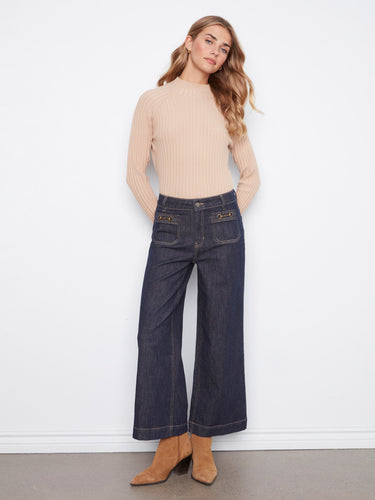
Dark wash jeans read as intentional and considered by default. The deep indigo removes the casual signal that lighter washes convey, which is why they work across more occasions without effort. At 40 and beyond, this is the single most useful quality in a wardrobe piece: one pair that transitions from a Saturday morning to a dinner out with a shoe swap. Denim is not a category to step away from after 40; it is one worth understanding more fully and wearing more confidently.
The Silhouettes That Work Hardest After 40
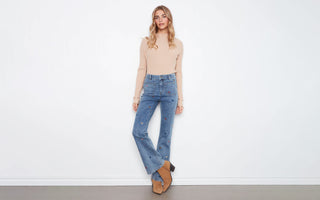
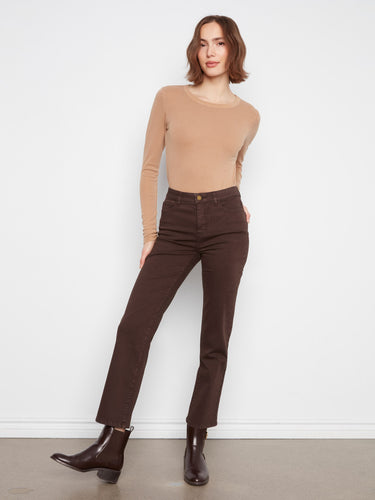
Straight-leg and wide-leg are the two most universally flattering silhouettes for women over 40. Both elongate the leg when the rise sits at the natural waist and the hem is the correct length. Bootcut and a subtle flare work well for balancing fuller hips. Skinny jeans have largely stepped back; relaxed cuts deliver the same polished result with more comfort. For any silhouette, a note on what to avoid: barrel cuts and heavily cropped lengths that visually shorten the leg.
How Wash and Colour Change Everything
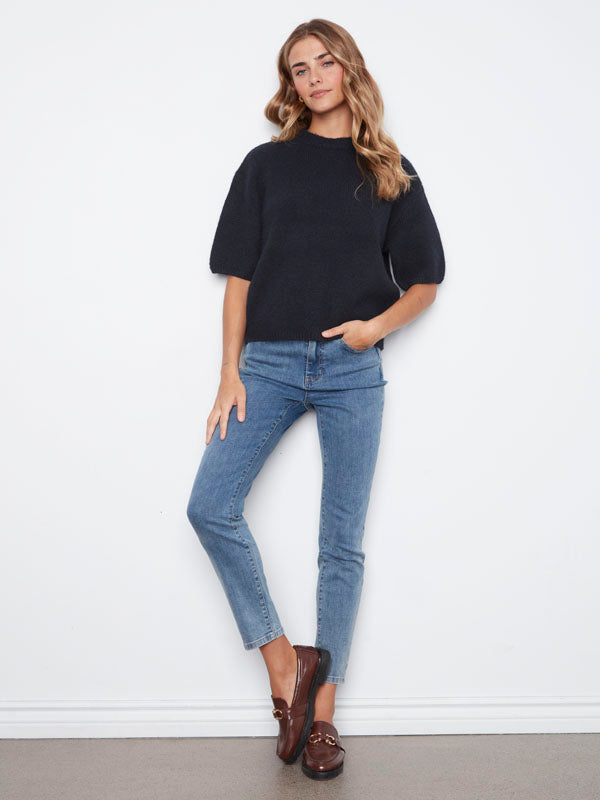
Dark wash is the closest thing in a jeans wardrobe to a trouser: it dresses up easily and reads as intentional. Medium wash is the reliable everyday casual workhorse and pairs well with knitwear and relaxed layers. Avoid very light washes or heavy distressing when a polished look is the goal. A clean, unfaded indigo color is the most versatile starting point for building jeans outfits in your 40s and beyond; it does the dressing-up work before anything else is added.
The Rise Question: High, Mid, or Somewhere in Between
High-rise jeans have become the dominant choice for women over 40 because they elongate the leg and sit comfortably without digging. Mid-rise suits longer torsos where a very high waistband can feel proportionally crowded. The waistband should sit flat without pulling. This is the most reliable comfort signal when trying jeans on. Avoid low-rise cuts which have faded from trend relevance and offer limited comfort for most bodies. Rise is the variable most worth getting right before making any other styling decision.
What to Wear on Top: The Formulas That Always Work

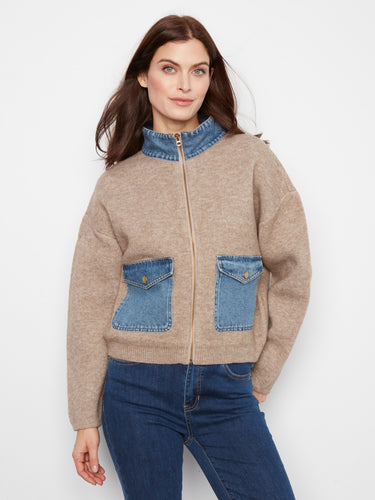
Formula 1: dark wash straight-leg jeans plus a tucked blouse or button-front top, the dressed-up casual look that transitions from daytime to evening. Formula 2: wide-leg or flare jeans plus a slim-fitted knit is the proportion-balanced everyday outfit. Formula 3: mid-wash straight-leg jeans plus a relaxed cardigan or lightweight jacket for the versatile layered look. The half-tuck is a useful middle ground when a full tuck feels too considered. Each formula works across the 40s, 50s, and 60s without modification.
Shoes Make or Break a Jeans Outfit
Ankle boots with a small heel are the most flexible pairing across straight, wide, and flared cuts. Pointed-toe flats or loafers keep the silhouette clean and slightly elevated without formality. Sneakers work well with straight-leg and relaxed cuts; avoid pairing them with wide-leg jeans unless the hem grazes the top of the shoe to maintain the vertical line. For wide-leg specifically, heel height matters: the hem should graze the top of the footwear to avoid a break in the line that shortens the visual leg.
Styling Jeans for Different Occasions After 40
Casual weekend: mid-wash straight-leg jeans, a relaxed cotton top, clean sneakers or flat sandals. Casual lunch: dark wash wide-leg jeans, tucked blouse, ankle boots. Evening out: dark-wash straight- or flare-leg jeans, elevated knit or silk-style top, heeled boot or pointed flat. Each occasion calls for the same core principle: let the wash and the top do the dressing-up work. The jeans stay consistent; the top and the shoe shift the register from one context to the next.
Petite and Tall Considerations: Adjusting the Formulas for Your Frame
Petite frames: cropped straight-leg or ankle-length jeans avoid overwhelming the silhouette; a full-length wide-leg benefits from tailoring to avoid dragging. Taller frames: full-length wide-leg and straight-leg styles work well; avoid cropped cuts that disproportionately draw attention to length. Inseam is the most important specification to check before buying, not just waist size. A single tailor visit to hem one well-fitting pair is worth more than five pairs that almost work. Frame-specific guidance is the starting point; personal comfort is the override.
Dressing for Seasons: Jeans All Year Round
The same silhouette principles that apply in the 40s continue into the 50s and beyond, but comfort and ease of movement move higher on the priority list. Pull-on waistbands remove gaping and pinching as the waist-to-hip ratio shifts. High-rise styles remain the most versatile and consistently recommended choice for jeans for women over 50. Darker washes and clean hems are the most polished choices at any age. The decisions are the same across the decades; the weighting toward comfort simply increases.
The Biggest Jeans Mistakes Women Over 40 Make (and How to Avoid Them)
Gaping at the back waist is almost always a rise problem, not a size problem: adjust the rise before the size. Sagging at the knee by noon is a fabric and stretch-content issue. Too tight across the thigh with room at the waist is a cut problem, solved by a curvy or relaxed fit. A dragging hem transforms how any pair of jeans looks: hemming is inexpensive. Wearing the wrong rise for the torso length is the most common mistake and most straightforward to correct.
The Charlie B Jeans Edit for Women in Their 40s, 50s and Beyond

Charlie B builds jeans with stretch and structure in mind, which matters more as bodies change through the 40s and 50s. The range includes straight-leg, wide-leg, and pull-on constructions that reflect the fit priorities this guide covers across every outfit formula. Stretch content is built into the fabric rather than added as a panel, which preserves the look of traditional denim while delivering the comfort of a more forgiving construction.
Conclusion
How to style jeans in your 40s, 50s, and beyond comes down to three decisions applied consistently: silhouette, rise, and wash. Silhouette sets the proportion, rise determines the fit at the waist and midsection, and wash decides whether the jeans dress up or stay casual by default. One great-fitting pair in the right silhouette and wash is the starting point for everything else. Charlie B women's jeans collection, or the wide-leg jeans collection, has the silhouette that earns its place the hardest.